
VERMONT FRENCH-CANADIAN GENEALOGICAL SOCIETY
Saturday, September 27, 2025
9:30 AM “The Sad Necessity of Abandoning Canada: French Canadians and Pursuit of the American Cause, 1774-1776” by Mark R. Anderson
Canada was the largest British North American colony that did not join the United States. That outcome was not due to a lack of interest on either side. The First Continental Congress specifically invited the inhabitants of the Province of Quebec to join the American political cause. English Canadians were the first to see a common bond; but by the summer of 1775, with the nearly simultaneous outbreak of the Revolutionary War, the implementation of the Quebec Act, and the imposition of martial law in Canada, various French-Canadian groups formed to oppose the British government’s impositions. Some even started communicating directly with the American rebels.
With Canadian allies’ encouragement, the Americans invaded in September 1775. Hundreds of French Canadians cooperated and directly contributed to the Continental expedition’s surprising initial success—all the way to the fortified walls of Quebec City. But the campaign failed in 1776. The Continental army failed to “liberate” the Canadians. The Province of Quebec would not become the fourteenth state. French-Canadian partisans and supporters were left to face unwelcome consequences of their allegiance. A critical twenty-month period, from the First Continental Congress to the Declaration of Independence, forged the destiny of American Patriots and many French-Canadians who would be driven to a new homeland.
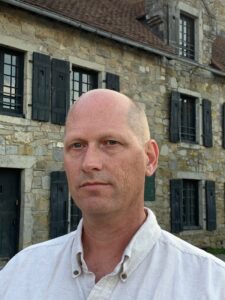
Mark R. Anderson is an independent historian in Colorado Springs, Colorado. He is a specialist in Canada, northern borderlands, and Native Americans in the American Revolutionary era. He is the author of multiple articles, essays, and three books, including The Battle for the Fourteenth Colony: America’s War of Liberation in Canada, 1774-1776, published in 2013.
11:00 AM “Divergent Roads: Canadian Exiles in the Maelstrom of Revolution and War” by Patrick Lacroix
Thousands of French Canadians supported the forces of revolution that swept into Quebec in 1775; hundreds followed those forces out in 1776. While their families remained in Quebec or lived as refugees in New York, men fought in the Continental Army through the final confrontation at Yorktown. This was not the end of their struggles, however. Congress had made a commitment to the French-Canadian soldiers that would be left unfulfilled. With little means at their disposal, many scattered. Others accepted the promise of land in northern New York and formed what is arguably the first “Little Canada” in U.S. history. This presentation will trace the many challenges faced by refugee soldiers and their families over the course of two decades, notably as they sought to build new lives in Clinton County.
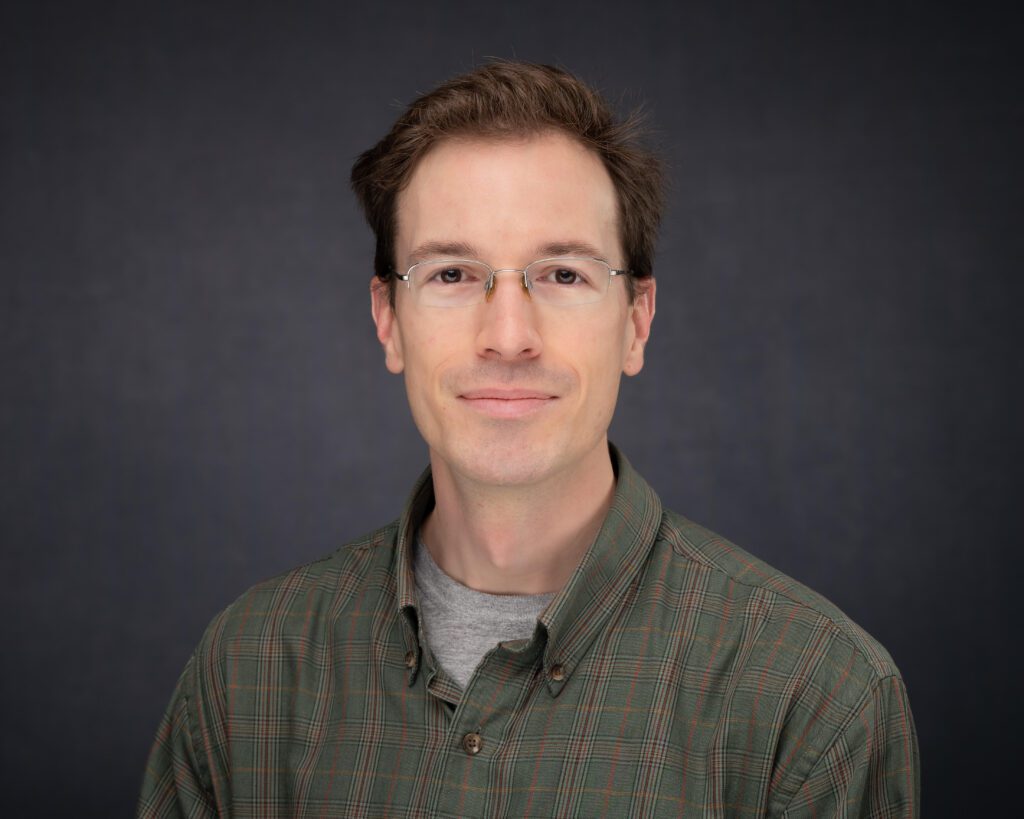
Patrick Lacroix, Ph.D., has served as director of the Acadian Archives in Fort Kent, Maine, since 2021. He previously taught at colleges and universities in New Hampshire, Quebec, and Nova Scotia. He is the author of John F. Kennedy and the Politics of Faith and “Tout nous serait possible”: Une histoire politique des Franco-Américains. His research on Franco-American communities has appeared in numerous peer-reviewed journals. His work currently focuses on rural migrations prior to the U.S. Civil War.
1:15 PM “The World Turned Upside Down: Understanding the Loyalist Perspective During the American War of Independence” by Syl Beaudreau
An introduction to the Loyalist migrations will be presented, focusing on the number, origins, patterns of migration, and historical consequences of this movement of populations, along with some of the reasons these colonists chose to leave their homes and take up a new life in a distant land.
How significant, in terms of numbers, was the Loyalist migration? Who tended to be a Loyalist, and why did they cling so strongly to their pro-British allegiance? What percentage were they in terms of the general population? How polarized were Thirteen Colonists at the time of the revolutionary struggle? Where did the Loyalists come from? Were they a diverse group, and if so, how? Were they members of the elite or common people? How and when did they tend to make a decision to leave? What routes did they take? Where did they end up? How did this experience affect families? How did they see themselves? And, finally, what was the long-term impact of the Loyalist migrations for Canada?
Following this, Syl will show a short (half-hour) historical film, based on a true story of one New York family’s experience of the Revolutionary War. The film focuses on what it was like to be on the loser’s side of this conflict. It is a rarely presented perspective. A guided discussion will follow.

Syl Beaudreau is Associate Professor of History and Canadian Studies at SUNY Plattsburgh. She received her B.A. at Concordia University, Montreal, her M.A. and Ph.D. at York University, Toronto, and held a SSHRCC Postdoctoral Fellowship at Laval University in Quebec City. Her research has covered a wide diversity of subjects, including French Canadian emigration to the United States, Quebec’s Quiet Revolution, popular images of Canada in National Geographic, American collective memories of Samuel de Champlain, and hockey history. She has been a featured speaker on PBS documentaries on the French and Indian War and the history of Lake Champlain, the latter of which won a regional Emmy Award.
Misc. Information
Our schedule will include a short business meeting for members. Come early to browse genealogy displays and our book sale.
Registration
Cost: $42 Members – $52 Non-Members. The option of a sandwich lunch for $15 may be ordered ahead.